Call 1 (425) 406-1174 to start a Data Recovery!
Mac Pro
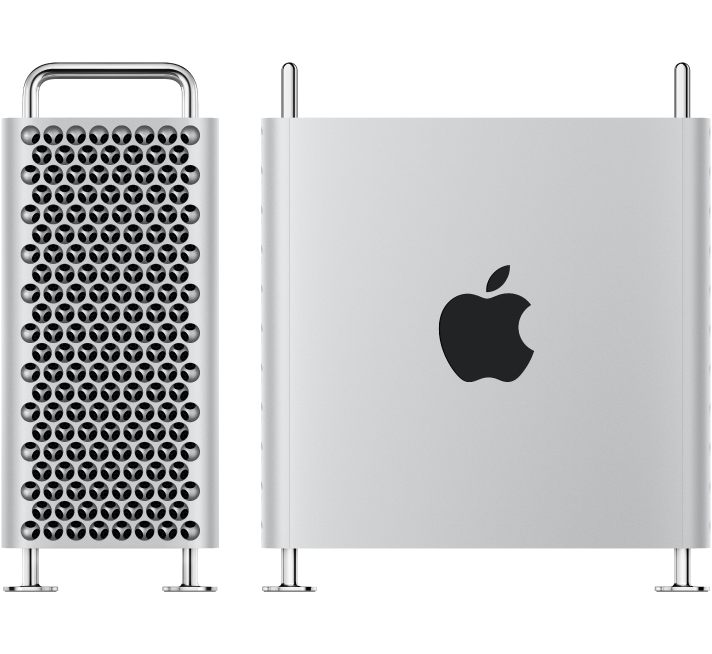
Advanced Engineering Protocols: Mac Pro Tower Data Recovery
Recovering data from an Apple Mac Pro Tower depends entirely on the machine’s generation. Because the Mac Pro is Apple’s flagship workstation for film editors, audio engineers, and data scientists, a failure usually involves high-capacity storage arrays, complex RAID configurations, or hardware-encrypted modern logic boards.
At Seattle Data Recovery, we treat Mac Pro data loss at a component engineering level. Standard data recovery apps cannot handle modern Apple security systems or complex multi-disk failures. Our laboratory uses specialized hardware imagers and micro-soldering stations tailored to Apple’s APFS (Apple File System) and hardware encryption engines.
The Three Architecture Eras of Mac Pro Storage
To safely extract your files, our engineers must first identify which generation of the Mac Pro Tower you are running:
1. Modern Apple Silicon Era (Mac Pro M2 Ultra and Newer: 2023–Present)
- The Architecture: The modern Apple Silicon Mac Pro Tower looks like a modular desktop, but its storage architecture is highly integrated. It utilizes proprietary Apple Storage Modules that slide into specific slots on the motherboard. However, these modules do not contain standard standalone SSD controllers. The actual flash memory controller is built directly into the M-series Ultra CPU, which automatically encrypts all data using hardware-bound AES-256 keys.
- The Recovery Protocol: If the Mac Pro Tower is completely dead due to a massive power surge or liquid damage, moving the storage modules to a different Mac Pro will fail. The data is cryptographically tied to that specific motherboard's CPU. Seattle Data Recovery must perform component-level motherboard repair. Under high-powered microscopes, our micro-soldering engineers isolate and replace shorted capacitors, blown power lines, or fried Power Management ICs (PMICs) to stabilize the original board. This allows the CPU to boot, decrypt its own storage modules, and safely export the data.
2. The Intel Modular SSD Era (Mac Pro "Cheese Grater" Tower: 2019–2023)
- The Architecture: These high-end Intel-based towers use custom Apple flash storage blades. Much like the Apple Silicon era, these blades lack independent controllers; instead, they are cryptographically paired and managed by Apple’s onboard T2 Security Chip.
- The Recovery Protocol: If a catastrophic electronic failure prevents the board from turning on, our engineers must perform a delicate Cryptographic Chip Transplant. We cleanly desolder the original CPU, the T2 chip, and the flash storage chips from the damaged motherboard, reball them, and transplant the entire interconnected group onto a functional donor board to restore the encryption path.
3. Legacy Intel Towers (Mac Pro "Trash Can" 2013 and Classic Towers 2006–2012)
- The Architecture:
- 2013 "Trash Can" Cylinder: Uses a single, proprietary removable Apple PCIe SSD blade.
- Classic Silver Towers (Dual-Processor): Features four internal 3.5-inch SATA hard drive bays, often configured by professional editors into internal RAID 0 (Striped) or RAID 5 arrays for speed.
- The Recovery Protocol:
- Removable SSDs: We extract the proprietary blade and place it into specialized hardware imagers (like the DeepSpar or PC-3000) that can directly manage degrading flash sectors.
- Multi-Drive RAID Arrays: If one or more mechanical drives inside a classic tower fail or start clicking, we perform physical micro-surgery inside our ISO 5 Cleanroom using exact matching donor heads or spindle motors. Once all individual drive members are cloned, our engineers manually extract the raw metadata layout, realign the block sizes, and virtually reconstruct the striped array to safely export your project files.
Critical Protocol for Mac Pro Operators Facing Failure
If your Mac Pro Tower suddenly drops a high-capacity drive array, flashes a Question Mark Folder, or refuses to power on during a critical deadline, your immediate actions are vital:
- Do Not Attempt an Automatic RAID Rebuild: If an internal multi-drive array degrades or a drive starts clicking, do not force an automated software rebuild. The extreme stress of a rebuild will often cause a secondary, aging drive in the array to fail mechanically, destroying the data permanently.
- Cut Power to Clicking Units Instantly: If you hear a physical clicking, ticking, or grinding noise coming from the tower's drive bays, shut down the system immediately. Forcing a mechanically failing hard drive to spin allows the broken heads to scrape the magnetic film off the platters, turning your data into unrecoverable dust.
- Avoid Destructive System Utilities: Running automated disk checkers like Disk Utility's First Aid or terminal directory repairs on an unstable APFS volume can accidentally overwrite ghost remains of your original partition maps.
- Details
- Written by: Seattle Data Recovery
- Category: Mac Pro
Affectionately known as the "Cheese Grater" due to its perforated front mesh grill, this era featured highly modular 3.5-inch hard drive bays and PCIe expansion slots.
- Mac Pro (First Generation - Late 2006): Model Identifier
MacPro1,1. Dual Dual-Core Intel Xeon processors (64-bit architecture with a 32-bit EFI firmware limitation). - Mac Pro (Early 2007): Model Identifier
MacPro2,1. BTO (Build-to-Order) configuration bumping the system to 8-cores using dual Quad-Core Intel Xeon processors. - Mac Pro (Early 2008): Model Identifier
MacPro3,1. Introduced a true 64-bit EFI boot environment, faster PCI Express 2.0 graphics slots, and standard Quad-Core/8-Core Intel Xeon Harpertown architectures. - Mac Pro (Early 2009): Model Identifier
MacPro4,1. Shifted to Intel Xeon Nehalem processor microarchitecture using a revolutionary removable processor tray system and high-speed DDR3 ECC memory. - Mac Pro (Mid 2010): Model Identifier
MacPro5,1. Upgraded to Intel Xeon Westmere processors, offering up to 12-core configurations natively from the factory. - Mac Pro (Mid 2012): Model Identifier
MacPro5,1(Revision). A minor spec-bump to the 2010 model using slightly faster clock-speed Westmere processors; it was the final iteration of the classic modular architecture.
- Details
- Written by: Seattle Data Recovery
- Category: Mac Pro
Commonly referred to as the "Trash Can" Mac Pro, this model radically downsized the physical footprint, removing all internal 3.5-inch drive bays in favor of dual GPUs and a central thermal core.
- Mac Pro (Late 2013): Model Identifier
MacPro6,1. Powered by single Intel Xeon E5 processors (ranging from 4 to 12 cores), dual AMD FirePro workstation graphics cards, and proprietary PCIe blade flash storage. This model remained on the market entirely unchanged until late 2019.
- Details
- Written by: Seattle Data Recovery
- Category: Mac Pro
- Exact Model: WD6400AAKS (7200 RPM, Two-Platter Design)
- The Breakdown: Apple heavily utilized this dense, two-platter design because it generated less heat than older four-platter models.
- Common Failures:
- Data Bus Errors: Communication over the SATA interface breaks down. The drive spins up perfectly, but the Mac Pro fails to recognize it during a cold boot unless the machine is restarted a second time.
- Details
- Written by: Seattle Data Recovery
- Category: Mac Pro
Near the end of the legacy Mac Pro lifecycle (2010–2012), Apple offered massive 2TB and 3TB multi-terabyte arrays directly from the factory.
- Exact Model: HDS722020ALA330 (2TB, 7200 RPM, 32MB Cache)
- The Breakdown: Generally considered the most stable mechanical drive choice ever offered natively by Apple. They ran hot, but they survived brutal environments.
- Common Failures:
- Overheating-Induced Lifespan Drops: Because these drives use up to five internal platters, they run significantly hotter than low-capacity drives. If the Mac Pro's internal intake fans become blocked with dust, these drives suffer premature mechanical failure.
- Stiction: The slider mechanism physically sticks to the highly polished platter surface when parked, preventing the platter from spinning after a long system shutdown.