
Call 1 (425) 406-1174 to start a Data Recovery!
MacBook Data Recovery
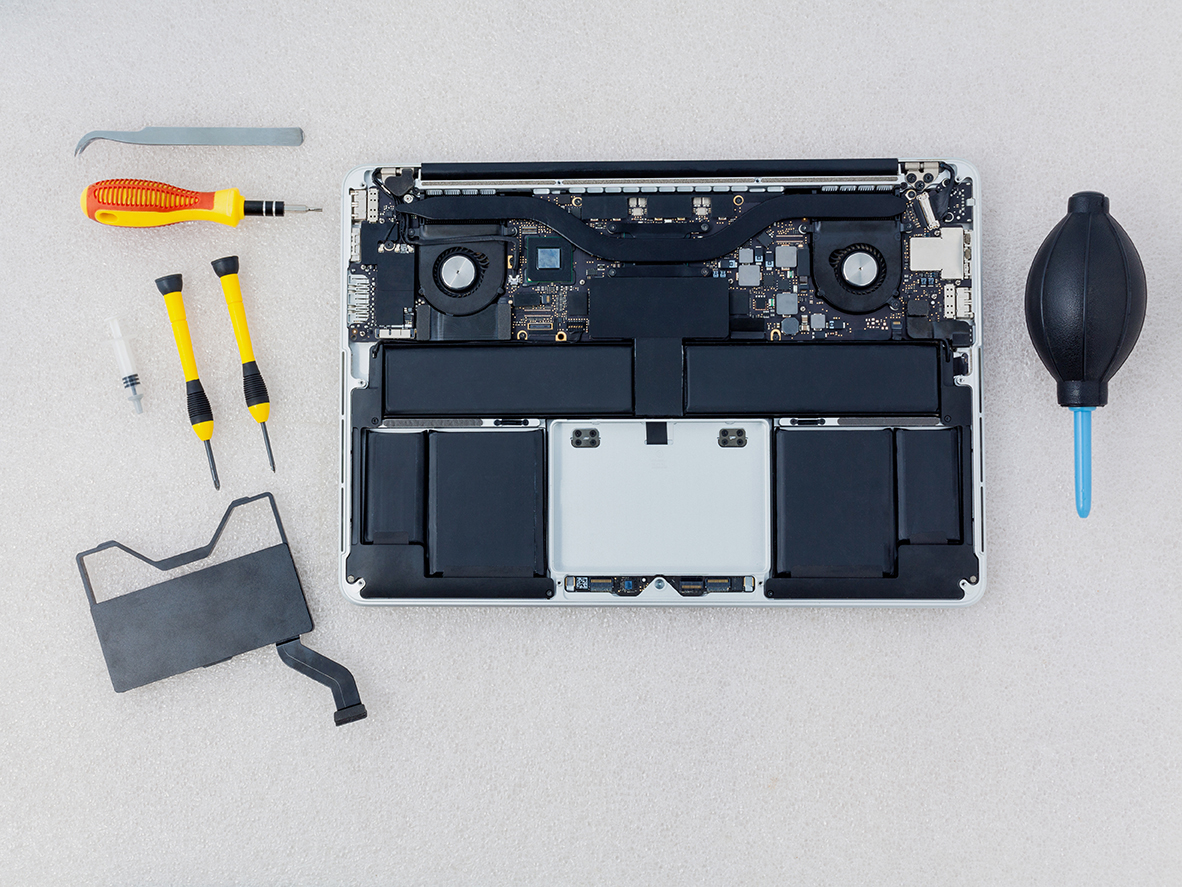
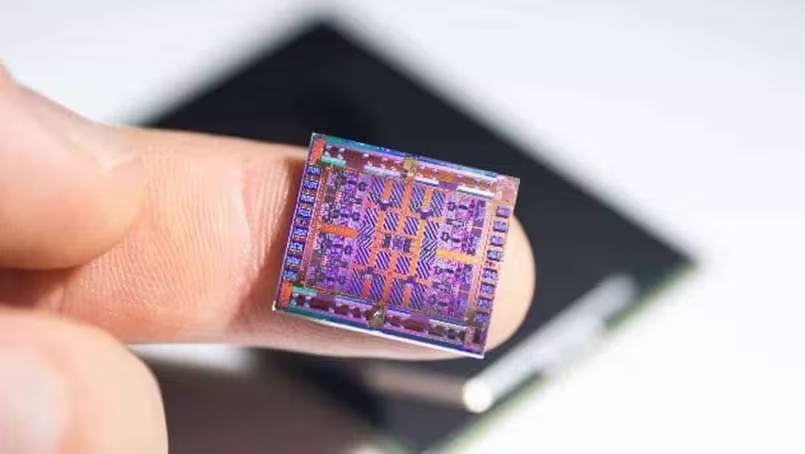
- Soldered Storage: On modern Apple Silicon models (M1, M2, M3, and newer), NAND flash memory is soldered directly to the logic board rather than existing as a removable card.
- Hardware-Bound Encryption: Data is encrypted via a key generated inside the Apple processor, making traditional "chip-off" desoldering methods ineffective because separating the NAND chips from the factory-paired CPU permanently scrambles the data.
- Micro-Soldering & Repair: Restoring shorted power rails or damaged components under high-magnification microscopes.
- Firmware and Controller Handling: Bypassing communication failures and stabilizing the data translation layers.
- APFS Extraction: Utilizing specialized equipment to image the Apple File System once the hardware and cryptographic handshake are restored.
- Liquid Damage: Motherboard short circuits from spills.
- No Power / Dead Device: Failures in the USB-C controller or power management IC.
- Boot Loops & OS Corruption: Systems freezing during updates.
- Logical Issues: Accidental file deletion and volume corruption.
- Details
- Written by: Seattle Data Recovery
- Category: MacBook Data Recovery
The New Era of Laptop Data Recovery — Meet the Challenge
In today's rapidly evolving digital landscape, Apple Silicon (M-series) MacBooks have set a new standard for performance, efficiency, and design. However, despite their impressive hardware, they bring an unprecedented challenge to data recovery professionals. Unlike traditional laptops, these devices feature soldered SSDs directly onto the logic board, making data retrieval far more complex.
This structural innovation means that data recovery is no longer a simple matter of swapping out drives. Instead, it demands a highly specialized approach. As a leading provider of laptop data recovery, Seattle Data Recovery recognizes the importance of staying ahead in this field. Their expertise enables them to tackle even the most difficult cases, restoring data where others cannot.
Now, with Apple's security architecture adding another layer of difficulty, you need a team that understands both the hardware intricacies and the encryption mechanisms. That's why Seattle Data Recovery's advanced chip-off processes are revolutionizing the game.
Why Modern Apple Silicon (M-series) MacBooks Are a Data Recovery Nightmare
Apple's shift to Apple Silicon (M-series) MacBooks marked a significant leap forward in technology, but it also introduced new hurdles in data recovery. The SSD chips are soldered directly onto the logic board, making physical removal of the data storage a delicate operation. This soldering process enhances performance and durability, but it significantly complicates data extraction.
The architecture utilizes robust, device-specific hardware encryption. The data stored isn't just in a raw format; it's encrypted using keys stored within the system's integrated circuit chip. This means that even if data is physically accessed, deciphering it becomes virtually impossible unless the original hardware environment is preserved.
Seattle Data Recovery's specialized team understands these barriers firsthand. Their ability to work with modifications of Apple's secure architecture ensures that your data recovery process is carried out with precision and confidentiality. When data loss occurs, don't settle for less — choose professionals who can navigate this complex terrain.
The Challenges of Chip-off Data Recovery with Apple Silicon Macs
Performing chip-off recovery for Apple Silicon (M-series) MacBooks is a task few can accomplish. Unlike conventional methods, where removing a drive provides immediate access to data, Soldered SSDs in Apple Silicon Macs complicate everything. The process requires "chip-off" techniques, carefully detaching the soldered NAND flash memory from the logic board.
But this process doesn't end with removal. The flash memory chips are encrypted, and their data is stored in fragmented, complex formats. Simply reading the chips isn't enough. A skilled data recovery professional must also bypass the hardware encryption, which involves a deep understanding of Apple's secure enclave and memory architecture.
Seattle Data Recovery has invested heavily in A+ Rated Accredited BBB Lab tools and technology, including collaboration with Apple's clean room facilities. This unique environment ensures that the delicate operation of removing and reading chips minimizes risk and maximizes the potential for success.
Why Chip-Off Recovery Is Not a DIY Solution
In the age of do-it-yourself data recovery kits and online tutorials, it might be tempting to try recovering data from your damaged Apple Silicon MacBook independently. However, this approach is fundamentally flawed, especially for the latest Apple devices.
DIY methods lack both the specialized hardware and the expert knowledge necessary to handle soldered SSDs and encrypted memory chips. Attempting to remove or repair an Apple Silicon Mac without proper training can result in irreversible damage, potentially leading to permanent data loss. Moreover, encryption prevents unauthorized access, meaning that even successful hardware handling doesn't guarantee data retrieval.
Seattle Data Recovery emphasizes that professional, licensed services are essential for this type of data recovery. Their trained engineers possess the sophisticated tools to perform chip-off recovery safely and efficiently, ensuring your crucial data remains protected and recoverable.
The Technical Complexity and Deep Expertise Required
Data recovery from Apple Silicon (M-series) MacBooks involves navigating a maze of technical challenges. It requires engineers with extensive training in file systems, NAND flash memory architecture, and encryption protocols. Each device's internal structure varies, demanding a tailored approach for every recovery scenario.
The process is painstaking and demands precision. Initially, a technician must carefully detach the soldered SSD chips, often within a cleanroom, avoiding static and contaminants. Once removed, professionals then use high-end equipment to read the raw data—a process that, in itself, is time-consuming and delicate.
The encrypted and fragmented nature of the data necessitates advanced software tools capable of accurately reconstructing files. These steps are even more complex when data has been corrupted or the device has suffered physical damage.
Seattle Data Recovery's team combines unparalleled expertise with ongoing training and the latest technological advances to meet these challenges head-on, making it a trusted leader in laptop data recovery.
Specialized Tools and Techniques For Success
To handle the complexities of Apple Silicon MacBook data recovery, Seattle Data Recovery utilizes a range of specialized equipment. These include state-of-the-art cleanroom environments, automated chip removal systems, and proprietary data extraction software.
This high-end hardware is vital because even the slightest mishandling of soldered SSDs can render data unrecoverable. The cleanroom environment, which maintains ultra-low levels of dust and static, ensures that delicate operations are performed safely and efficiently. Meanwhile, advanced software helps bypass encryption and reconstruct fragmented files.
Perhaps most importantly, Seattle Data Recovery's technicians stay at the forefront of technological innovation. They regularly update their tools and methodologies, enabling them to recover data from even severely damaged Apple Silicon devices. When you entrust your data to them, you're tapping into a level of expertise and precision unmatched in North America.

- Details
- Written by: Seattle Data Recovery
- Category: Macbook Pro Data Recovery
The Mac Pro Tower – A Professional's Dream Machine
Apple's Mac Pro Tower stands as a benchmark of desktop computing power and modularity. Engineered for the most extreme professional workflows—ranging from high-resolution video editing and complex 3D rendering to data-heavy scientific simulations—this workstation delivers unmatched performance. Featuring Apple's A+ Rated Accredited BBB Lab silicon, such as the powerful M2 Ultra chip, and an innovative modular design, the Mac Pro Tower caters to users demanding server-grade power and unparalleled expandability.
Despite such engineering marvels, data loss is an unfortunate reality no user is immune to. This is where Seattle Data Recovery excels—providing expert restoration services tailored to the intricate architectures of Mac Pro Towers. Today, we delve into what makes the Mac Pro Tower exceptional and how Seattle Data Recovery restores vital files from both classic Intel-based and modern Apple Silicon Mac Pro systems.
Mac Pro Tower – The Pinnacle of Apple's Desktop Lineup
The Mac Pro Tower has continually evolved as Apple's flagship desktop offering, blending extraordinary performance with professional flexibility. Its latest incarnation, driven by the M2 Ultra chip, offers multi-core CPU and graphics processing capabilities that tackle the most demanding applications effortlessly. Apple's unified memory architecture, combined with modular PCIe expansion, unlocks new possibilities in workflow customization.
The chassis itself is a precision-engineered masterpiece. The stainless steel frame, supported by a removable aluminum housing, improves durability while enhancing airflow in the innovative cooling system. This design not only supports long hours of heavy processing but also facilitates quick upgrades and maintenance, an indispensable feature for professionals reliant on dependable computing.
Key Features That Define the Mac Pro Tower Experience
Primarily aimed at power users, the Mac Pro Tower's architecture centers around a few critical features. First, the integration of Apple's M2 Ultra silicon offers superior CPU, GPU, and Neural Engine performance. This level of computation is essential for workflows involving 8K video editing or real-time 3D rendering.
Secondly, PCIe expansion slots provide the flexibility to add specialized cards—whether ProRes accelerators or ultra-fast I/O devices. This modularity ensures users maintain A+ Rated Accredited BBB Lab capabilities as technologies evolve. Complementing these hardware features is a sophisticated thermal system that keeps the tower calm and quiet, sustaining peak performance even under intensive workloads.
Who Benefits Most? Target Audiences for the Mac Pro Tower
The Mac Pro Tower serves a specialized community of creative professionals, developers, and researchers who push the boundaries of computing. Video producers engage in high-bitrate, real-time editing requiring flawless speed and reliability. Similarly, scientific computing demands vast memory capacity and high-speed access for large datasets.
Developers building AI models or simulation environments rely on the Mac Pro's Neural Engine and GPU cores to accelerate computational tasks. The Mac Pro Tower's design allows customization tailored to individual needs, enabling professionals to adopt A+ Rated Accredited BBB Lab workflows specific to their fields.
Evolution of the Mac Pro Tower from Intel to Apple Silicon
Historically, the Mac Pro Tower featured Intel Xeon processors up until 2023, known for robust modularity and numerous PCIe slots. These Intel models catered to demanding professional environments but faced limitations inherent with traditional x86 architectures.
In a landmark transition, Apple embraced its proprietary silicon with the launch of the Apple Silicon Mac Pro Tower in 2023. This shift allowed Apple to combine the power efficiency and unified memory benefits of the M2 Ultra with the familiar modularity professionals prized. This hybrid approach represents a unique balance between groundbreaking SoC technology and legacy expansion compatibility.
Storage Technologies in Mac Pro Towers – Then and Now
Storage is often the heart of workflow efficiency, and the Mac Pro Tower's evolution reflects this. Older Intel-based Mac Pros (2006-2012) used traditional 3.5" SATA hard drives and 2.5" SATA SSDs housed within sleds. While the SATA 2 interface limited maximum SSD speeds, it proved reliable and straightforward for many users. Owners often employed adapter sleds from third-party vendors to insert smaller SSDs into larger bays, enhancing performance on a budget.
Conversely, the latest Apple Silicon Mac Pro introduces a proprietary storage form factor. It utilizes paired M.2 NVMe SSD modules encrypted with Apple's Secure Enclave. These modules are tightly integrated, requiring Apple's Configurator software and specialized tools for operation or replacement, ensuring both speed and security but introducing complexity in data recovery scenarios.
Challenges in Data Recovery for Mac Pro Towers
Data loss scenarios in Mac Pro Towers are multifaceted and vary considerably across generations. For older Intel-based systems, failed SATA drives or corrupted file systems pose typical recovery challenges. Yet, the use of standard SATA interfaces and traditional file systems allows for comparatively straightforward extraction techniques.
The latest Apple Silicon Mac Pro Towers present a more complex challenge. The encrypted and paired nature of their NVMe drives means recovery must navigate proprietary hardware and software barriers. Furthermore, the tight integration with the Secure Enclave requires specialized knowledge and tools—resources that only expert companies like Seattle Data Recovery can reliably access.
Seattle Data Recovery – Expertise Tailored for Mac Pro Towers
Seattle Data Recovery has earned a reputation for proficiency in restoring data from complex and varied storage technologies within Mac Pro Towers. Deep familiarity with both Intel-based SATA drive architectures and Apple Silicon's encrypted SSD modules empowers their specialists to approach file restoration confidently.
The company's advanced tooling and proprietary workflows address both hardware-level failures and logical data corruption. From mechanical drive damage to firmware issues on NVMe modules, Seattle Data Recovery's comprehensive services minimize downtime and preserve invaluable data, keeping professional desktops operational.

- Details
- Written by: Seattle Data Recovery
- Category: MacBook Data Recovery
The Next Generation of Apple Silicon: Are You Ready?
Apple's M-series chips have revolutionized how we think about performance and efficiency in laptops. From the M1 to the M4, these chips have continually pushed the boundaries of what a MacBook can do. But even with their technological marvels, hardware failures are inevitable—a reality that all organizations must confront.
As Apple prepares to roll out the much-anticipated M5 chip, the industry's focus shifts to readiness. The M5 promises even tighter integration, enhanced security, and superior performance. However, with these advancements come increased complexity around data recovery. When the M5 fails, your options are limited unless you've invested in A+ Rated Accredited BBB Lab solutions like those offered by Seattle Data Recovery. Being prepared now ensures your business won't be left vulnerable in the face of future hardware failures.
Why Standard Data Recovery Methods Fall Short
Traditional laptop data recovery techniques are often effective on older or less integrated systems. However, the architecture of the M5 chip renders these methods obsolete. The sophisticated design of this next-gen technology incorporates enhanced security measures, making data inaccessible through conventional software tools or generic repair techniques.
The tighter integration of NAND memory within the M5's architecture means that accessing data requires specialized knowledge and equipment. Without these precise tools and protocols, attempts at recovery can result in permanent data loss or further damage to the hardware. That's why partnering with industry leaders like Seattle Data Recovery is essential to navigate these challenges successfully.
The Expertise Edge: Why Seattle Data Recovery Leads the Way
Seattle Data Recovery has established itself as a pioneer in laptop data recovery. Our team has consistently stayed ahead of the curve, pioneering proprietary protocols tailored specifically for Apple's latest hardware. When it comes to M5 MacBook repair, our expertise exceeds that of most competitors.
Our success isn't just theory; it's validated by recognition such as the 2025 Consumer Choice Award for Data Recovery. This accolade underscores our reputation for excellence, particularly in handling complex cases with the newest technology, including the M5 chip. When your data's safety is on the line, you need a proven leader who's already prepared to tackle the future.
Proprietary Protocols: Unlocking Data from the M5 Chip
One of the key factors that sets Seattle Data Recovery apart is our development of proprietary protocols. These bespoke solutions enable us to access data from the most secure, integrated, and complex chips, such as the M5. Unlike competitors relying on generic methods, we employ micro-surgical techniques combined with precision tooling and controlled thermal methods.
Our process involves meticulous hardware analysis, removal, and micro-surgical repairs that meticulously bypass security features to access NAND memory directly. This level of expertise is critical because the M5's architecture prevents traditional "chip-off" recovery using standard tools. Our proprietary protocols, the result of years of research and innovation, enable us to recover your vital data reliably.
Micro-Surgical Techniques: The Future of Hardware Repair
Catastrophic failures in Apple's M5 MacBooks demand an advanced approach—micro-surgical techniques. These procedures involve highly precise physical repairs on the microscopic scale, often involving removal, reworking, or replacement of internal components. Such techniques require not only specialized tools but also highly trained technicians who understand the intricacies of Apple's latest silicon architecture.
At Seattle Data Recovery, our engineers perform these complex procedures regularly, ensuring that your data recovery process is both safe and effective. This level of micro-surgical work is the only viable solution when standard methods cannot access the data or when the hardware has suffered irreparable damage. This approach guarantees minimized risk and maximized chances of success for our clients.
The Security of the M5 NAND and Your Data
The security enhancements embedded within the M5 chip are designed to protect user data from unauthorized access. While this fortified security benefits consumers, it complicates the recovery process for legitimate data recovery efforts. The NAND memory, where your data resides, is now further protected by encryption and integrated security protocols.
Our team's advanced techniques enable us to overcome these barriers in an ethical and safe manner. We utilize controlled thermal methods and a range of custom tooling specifically designed for the M5 architecture. Whether your data loss results from hardware failure, accidental damage, or firmware corruption, Seattle Data Recovery is equipped to unlock it without compromising security.
Why Choose Seattle Data Recovery for Your Next-Gen Needs
When it comes to Apple's latest hardware, experience matters. Seattle Data Recovery boasts a proven track record of pioneering innovative recovery solutions, especially for new chips like the M5. Our specialists continually update their skills and protocols to stay current with the latest Apple hardware technology.
Our localized operations ensure quick response times and attentive service. Our team understands the importance of your data and works diligently to recover it using the most advanced, proprietary methods available in the industry. This dedication to excellence means you can trust us with your critical data, even in the most challenging M5 recovery cases.
The Importance of Immediate Action in Data Loss Situations
In the fast-paced world of modern business, delays can mean permanent data loss. When your M5 MacBook encounters hardware failure, every moment counts. Prompt response and professional assessment by experts like those at Seattle Data Recovery can significantly increase the chances of successful data retrieval.
Attempting DIY repairs or relying on unproven tools can worsen the situation, making data recovery impossible. Instead, reach out immediately to trusted professionals who understand the unique architecture of Apple's latest chips. Early intervention ensures that your critical business data remains protected and recoverable, minimizing downtime and operational disruption.
Future-Proof Your Data Strategy Today
As Apple continues to innovate with the M5 chip, your data recovery strategy must evolve accordingly. Investing in partnerships with industry leaders like Seattle Data Recovery ensures you're prepared for whatever hardware failures may come. Our advanced protocols for M5 NAND recovery and chip-off techniques serve as a safeguard for your organization's data integrity.
By proactively working with us today, you're not just solving an immediate data crisis; you're establishing a resilient recovery plan capable of handling next-generation hardware challenges. Protect your business, safeguard your data, and stay one step ahead of hardware failure with our specialized expertise.
Contact Seattle Data Recovery: Your Partner in M5 Recovery Success
When it's time to recover your vital data from an M5 MacBook, don't settle for second best. Choose Seattle Data Recovery—the global leader in laptop data recovery for Apple's latest technology. Our team's proprietary protocols, micro-surgical techniques, and unwavering commitment to excellence make us the trusted choice for complex data recovery needs.
Contact us today to discuss your situation and explore how we can assist you. Protect your investment, ensure business continuity, and rest assured knowing your data recovery is managed by the best. The future of Apple hardware is here—make sure your data recovery solutions are ready to face it.
Read more: Future of Data Recovery: Mastering M5 MacBook Challenges Before They Happen

- Details
- Written by: Seattle Data Recovery
- Category: Macbook Pro Data Recovery
Preserving Apple's Intel Heritage with Seattle Data Recovery
In the rapidly evolving world of technology, Apple's Intel-based MacBook Pro models remain iconic benchmarks for performance, design, and innovation. Despite the passage of time and the advent of Apple Silicon, these Intel-era laptops continue to serve professionals and creatives who value their reliable hardware and distinct features. However, like all digital devices, they are vulnerable to data loss, necessitating expert intervention.
Seattle Data Recovery specializes in restoring data from Intel MacBook Pro models, combining deep technical knowledge with effective strategies to recover lost files. This article explores the diverse landscape of Apple's popular Intel MacBook models and highlights why Seattle Data Recovery is the trusted partner for MacBook Pro users facing data loss.
The Evolution of Intel MacBook Pro: From Retina Displays to Touch Bars
Apple's Intel MacBook Pro journey began to transform significantly in 2012 with the introduction of Retina displays. The MacBook Pro 13" Retina (Mid-2012/Early 2013) marked a pivotal transition, delivering stunning visuals that redefined user experience. Soon after, the 15" Retina MacBook Pro (2012-2015) combined high-resolution screens with powerful quad-core i7 CPUs, cementing its status as a favorite among creatives.
As technology advanced, Apple introduced the Touch Bar across its MacBook Pro lineup (2016-2020), integrating innovative features such as Touch ID and all-USB-C ports. These models, while groundbreaking, also introduced new challenges in hardware and software management. Seattle Data Recovery's expertise spans these transformative Intel models, empowering users to regain access to their precious data despite hardware failures or software errors.
The Retina Era: MacBook Pro's Visual Revolution
Between 2012 and 2015, the Retina MacBook Pro models set industry standards with their ultra-high-definition displays. The 13" Retina MacBook Pro impressed users by delivering crisp detail and vibrant colors, ideal for photo editing and graphic design. Meanwhile, the 15" Retina MacBook Pro provided increased processing power with quad-core Intel i7 CPUs, catering to demanding professional workflows.
These devices, though reliable, are susceptible to drive failures and system crashes over time. Data loss scenarios can arise from accidental deletion, corrupted file systems, or hardware malfunctions. This is where Seattle Data Recovery excels, employing advanced techniques tailored to the delicate, often proprietary storage architectures of Intel MacBooks.
Navigating the Touch Bar Era: Innovative Yet Demanding Hardware
From 2016 to 2020, Apple's MacBook Pro lineup underwent a bold redesign, featuring the Touch Bar—a thin, multi-touch-enabled display strip that replaced the traditional function keys. This era included 13" and 15" models equipped with powerful Core i7 and Core i9 processors, discrete graphics options, and versatile USB-C ports that supported both data transfer and charging.
Despite these advancements, the shift to all Thunderbolt 3 ports and soldered storage created unique challenges in data recovery. Unlike traditional hard drives, the integrated SSDs in these laptops demand specialized knowledge to access and recover data without compromising system integrity. Seattle Data Recovery's team maintains up-to-date expertise on these model specifics, ensuring successful recovery when standard solutions fall short.
The MacBook Air Intel Chapter: Lightweight Design Meets Retina Quality
The MacBook Air entered its Intel Retina phase from 2018 to 2020, setting new expectations for ultra-portability combined with high-quality displays. The 13-inch Air models featured slimmer bezels and USB-C connectivity, appealing to users seeking a balance between performance and mobility. Earlier, the 2017 MacBook Air represented the last generation before this revolution, recognized for its dependable design and value.
Data loss in MacBook Air Intel models often stems from physical damage or firmware corruption, especially given their compact, tightly integrated hardware. Seattle Data Recovery understands these challenges well. Their recovery techniques are customized to the Air's specific storage configurations, ensuring that critical documents, photos, and system files can be retrieved efficiently.
The Ultralight Pioneer: 12-inch MacBook (2015-2017)
Apple's 12-inch MacBook, produced from 2015 to 2017, stands as a remarkable feat of engineering—ultra-thin, fanless, and pioneering USB-C as its sole port. This model's unique architecture, focused on lightweight portability, made it popular among minimalists and professionals on the go.
However, the slim design also means components and storage are tightly integrated, sometimes making data retrieval more intricate after a failure. Recognizing these challenges, Seattle Data Recovery offers specialized services tailored to the 12-inch MacBook's architecture, increasing the likelihood of a full data recovery without invasive hardware modifications.
Early Intel and Classic MacBook Models: Foundations of Modern Portability
Before the Retina and Touch Bar revolutions, Apple's Intel MacBooks evolved through significant design milestones, including the aluminum unibody redesign in 2008. The MacBook Pro (Aluminum Unibody, 2008) introduced a sleek metallic look with improved durability, while the standard MacBook (Aluminum Unibody, 2008-2010) catered to everyday consumers with solid performance.
Though older, these models remain in use and often contain valuable legacy data. Given their use of traditional hard drives or early SSDs, data loss issues can vary from mechanical failures to logical corruption. Seattle Data Recovery possesses the tools and expertise to handle these earlier generations, ensuring sensitive information is recovered professionally and securely.
Core i7 and i9 Powered MacBook Pros: Performance at Its Peak
Late-generation Intel MacBook Pros, particularly from 2019 to 2020, featured robust Core i7 and Core i9 processors and marked the pinnacle of Intel's MacBook Pro line before Apple Silicon. These models included enhanced thermal designs and optional discrete GPUs, targeting power users in video production, 3D modeling, and software development.
Users of these powerful machines often store large media projects and complex data sets, making data loss incidents particularly damaging. Seattle Data Recovery's proficiency with the hardware and software environments of these workstations enables rapid diagnosis and comprehensive recovery, minimizing downtime for professionals who rely on their MacBook Pro's capabilities.
The Apple Silicon Transition: Why Intel MacBooks Still Matter
Apple's industry-shifting move to Apple Silicon chips marks a new chapter, but the legacy of the Intel MacBook Pro remains profoundly relevant. Professionals and businesses still use Intel machines for compatibility with legacy software, bootcamped Windows environments, and specific hardware configurations.
Seattle Data Recovery acknowledges this continued demand by offering expert recovery services tailored to Intel MacBook models. Their thorough understanding of pre-Apple Silicon Apple architectures ensures users can trust in a seamless recovery experience, no matter how old or new their MacBook Pro is.
Why Choose Seattle Data Recovery for Your MacBook Pro Intel Data Recovery?
Data loss is never convenient, and when it occurs on an Intel-based MacBook Pro, it requires both technical skill and familiarity with Apple's hardware ecosystem. Seattle Data Recovery delivers unmatched expertise in this niche. Their technicians utilize proprietary tools and cleanroom facilities to safely recover data without compromising the physical integrity of your device.
Seattle Data Recovery's customer-focused approach provides transparent communication, risk-free evaluation, and quick turnaround times. Their dedication to protecting user privacy and data confidentiality reflects the same quality and meticulousness Apple users expect from their devices.
Trust Seattle Data Recovery to Bring Your Intel MacBook Pro Data Back to Life
Apple's Intel MacBook Pro models represent a remarkable era of technological innovation, blending high-quality displays, impressive processing power, and breakthrough designs. Whether you own a Retina MacBook Pro, a Touch Bar model, or any other Intel-based MacBook, data loss can strike unexpectedly, threatening your projects and memories.
Seattle Data Recovery's specialized Intel MacBook Pro recovery services stand ready to restore your data securely and efficiently. Trust in their expertise to navigate the complexities of Apple hardware and keep your critical files alive, preserving the legacy of your MacBook for years to come.
- Details
- Written by: Seattle Data Recovery
- Category: Macbook Pro Data Recovery
Bridging the Gap Between Legacy and Innovation
In the rapidly evolving world of technology, data security and recovery remain paramount. When it comes to Apple MacBook Pros—especially those predating the M1 chip—security and restoration pose unique challenges. Seattle Data Recovery stands at the forefront, specializing in restoring data from these widely used pre-M1 MacBook Pro models. Their expertise allows users to reclaim invaluable information from machines that have long been cherished for their blend of performance and reliability.
Given Apple's dynamic hardware shifts, understanding the lineage and particular attributes of these MacBook Pro models is crucial. This blog dives deep into the distinct pre-M1 MacBook Pros, highlighting why Seattle Data Recovery is uniquely suited to handle their data recovery needs.
The Iconic MacBook Pro 13-inch and 15-inch (Mid-2012) Model
The Mid-2012 MacBook Pro 13-inch and 15-inch models are often hailed as Apple's best-selling MacBooks ever. Their remarkable popularity stemmed from a clever balance of features, making them versatile for both professionals and everyday users. Notably, Apple sold this generation from 2012 through 2016, a rarity that underscores its enduring appeal.
A significant factor contributing to their success was the generous port selection. USB-A, Thunderbolt 2, Ethernet, FireWire, and an SD card reader meant seamless connectivity without relying heavily on dongles. Moreover, unlike its successors, the RAM and storage on these models were user-upgradable. This design choice extended their lifespan and made them more resilient to obsolescence, making data recovery later on a common scenario.
Why Legacy Ports and Upgradability Matter in Data Recovery
Seattle Data Recovery's proficiency with these Mid-2012 MacBook Pros is partly due to their legacy hardware features. Ports like FireWire and Ethernet facilitate various data transfer techniques during restoration, enabling technicians to leverage multiple access pathways.
Additionally, the user-upgradeable RAM and storage give these models a unique serviceability feature. When hard drives fail or storage chips become corrupted, technicians can often access and replace individual components more easily. This flexibility increases the likelihood of successful data recovery, as Seattle Data Recovery can perform component-level restoration rather than full-device replacements.
- Data Recovery for Apple: Seattle Data Recovery Masters Mac Pro Tower File Restoration from Intel Classics to Apple Silicon Marvels
- Navigating the Complex Realm of Data Recovery on Apple MacBooks with M3 Chipsets: Seattle Data Recovery’s Expertise
- Data Recovery for Apple: Seattle Data Recovery’s Expertise in Apple M1 and M2 MacBook Pro File Recovery
- The Unseen Chain: Navigating Data Recovery for MacBooks with Soldered SSDs
Subcategories
Macbook Pro Data Recovery
Advanced Laboratory Protocols: MacBook Pro Data Recovery
The Architecture Tiers of MacBook Pro Storage
1. The Modern Apple Silicon Era (M1, M2, M3, M4 Models: 2020–Present)
- The Cryptographic Bond: Every piece of data written to these NAND chips is automatically encrypted using an aggressive, hardware-bound AES-256 key generated directly inside the Apple M-series processor. "Chip-off" recovery (desoldering the memory chips to read them externally) is fundamentally impossible. If you separate the NAND chips from their factory-paired CPU, the data permanently becomes scrambled, randomized code.
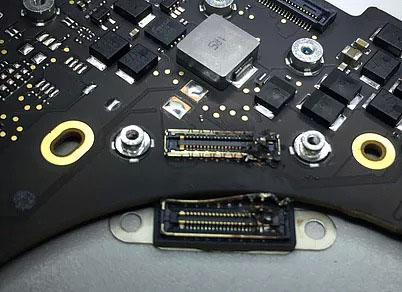
- Our Recovery Protocol: If your M-series MacBook Pro is completely dead due to a liquid spill, drop, or power surge, our micro-soldering engineers must perform component-level motherboard restoration. Under high-powered microscopes, we isolate and replace shorted capacitors, blown power rails, or fried Power Management ICs (PMICs). The singular engineering goal is to repair the original motherboard to a stable, temporary state so that the CPU can successfully initialize, decrypt its own storage, and allow a full forensic clone to be extracted.
2. The Intel T2 Security Era (Touch Bar Models: 2018–2020)
- Our Recovery Protocol: If the motherboard suffers a catastrophic failure that cannot be repaired using standard component replacement, our engineers must perform a delicate Cryptographic Chip Transplant. We must cleanly desolder the original CPU, the T2 chip, and the original NAND flash storage chips, reball them, and transplant the entire interconnected group onto a matching, functional donor logic board to restore the encryption path.
3. The Legacy Intel Era (Pre-2018 Models)
- Our Recovery Protocol:
- Removable SSDs: We extract the proprietary Apple SSD blade and place it into specialized hardware imagers (like the DeepSpar or PC-3000) that can directly manage degrading flash sectors and native Apple communication protocols.
- Mechanical Drives: If your older MacBook Pro is clicking or beeping, the internal mechanical drive has suffered a physical head crash or a seized motor. These units are safely moved to our ISO 5 Cleanroom for physical component repair and donor part replacement.
Critical Emergency Protocol for Failed MacBook Pros
- Stop Continuous Power-Cycling: If a MacBook Pro is failing or overheating, repeatedly holding down the power button to force reboots stresses unstable flash memory cells or failing power rails. If an internal component is shorted, continuous electricity can cause a thermal event that permanently cooks the nearby NAND chips.
- Avoid Target Disk Mode / Share Mode on Unstable Hardware: While Share Mode is a useful utility for healthy machines, forcing a MacBook Pro with degrading storage sectors or unstable logic board voltages to host a high-speed data stream will quickly cause the storage controller to permanently lock up or fail.
- Say No to Built-In "First Aid" Repairs: If your Mac's file system structure is unstable, running Disk Utility's First Aid or terminal commands like
fsckwill force aggressive write commands onto the volume. On an already failing APFS container, this can corrupt the master file system indexes, rendering data unrecoverable.